Flat Roof Ponding Mitigation & Membrane Seam Triage in Des Moines, IA
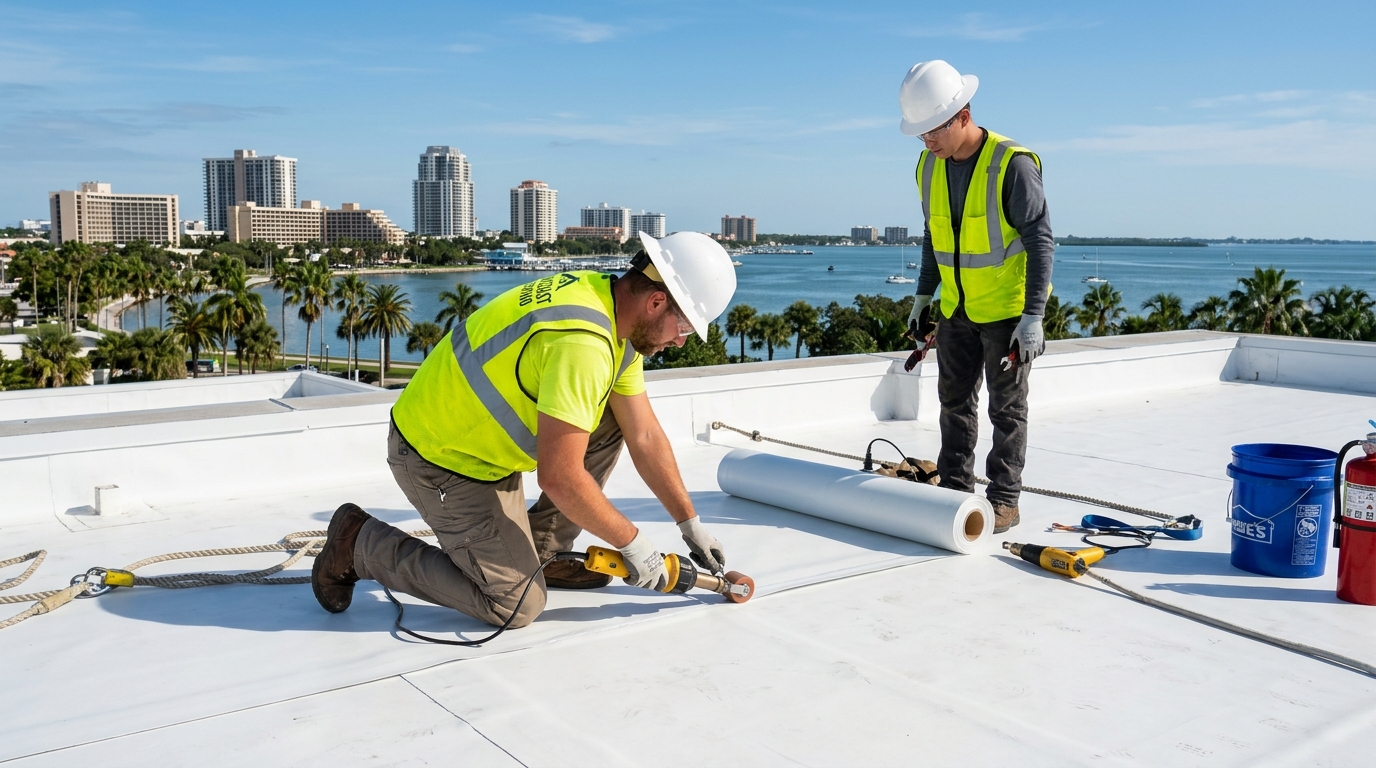
Commercial buildings, multi-family residences, and modern low-slope additions throughout the Des Moines metro area are vulnerable to hydrostatic standing water and membrane seam failure. Under NRCA standards, ponding water that remains on a roof surface for longer than 48 hours indicates structural deck deflection or drainage failure. Standing water accelerates membrane breakdown, degrades seam adhesives on EPDM and TPO systems, and adds dangerous hydrostatic dead loads (5.2 lbs per square foot per inch of water). Dispatched commercial specialists clear primary and scupper drains, repair separated lap seams, and install tapered polyisocyanurate saddles.
Experiencing Active Roof Failure or Storm Ingress?
Zero web forms, zero digital delays. Speak directly with a live Des Moines emergency dispatch coordinator to route vetted, licensed local Iowa contractors.
CALL 24/7 DISPATCH: (888) 208-41551. Regional Microclimate Dynamics & Central Iowa Storm Exposure
The Des Moines metropolitan area occupies a distinct topographical and meteorological crossroads in the Upper Midwest. Flanked by the convergence of the Des Moines River and the Raccoon River, the region experiences severe atmospheric shear when warm, moisture-laden air masses from the Gulf of Mexico collide with dense, fast-moving cold fronts descending from the Canadian Great Plains.
During the convective storm season spanning May through September, this thermal collision generates long-lived mesoscale convective systems (MCS) capable of unleashing catastrophic derechos. Straight-line wind corridors frequently exceed 80 to 100+ MPH, exerting intense torsional loading on residential roof trusses, lifting shingle tabs along windward eaves, and shearing ridge vent caps. Furthermore, heavy supercells produce severe hail barrages that strike roofing substrates at high kinetic velocities, shattering shingle fiberglass matting and fracturing brittle ridge caps.
During the winter months from November through March, the microclimate shifts to extreme sub-zero freeze cycles. Deep snowpack combined with inadequate attic ventilation generates destructive ice dams along cold roof eaves. Meltwater backs up behind ice barriers, forcing under shingle courses and penetrating nail shanks. These severe seasonal swings demand localized technical expertise tailored to Central Iowa climate realities.
2. Non-Destructive Moisture Diagnostics & FLIR Thermal Tracing
Locating the origin point of an active roof leak is notoriously challenging. Water rarely drips directly beneath the rooftop breach; instead, it enters through fractured shingles or compromised flashing, tracks horizontally along rafters, roof trusses, or electrical wiring conduits, and pools across ceiling drywall feet or yards away before leaking into finished living areas.
Contractors within our referral network eliminate destructive guesswork by employing advanced non-destructive diagnostic tools:
- ✓ High-Resolution FLIR Infrared Thermal Imaging: Detecting subtle thermal capacitance differentials. Wet cellulose or fiberglass batt insulation retains cold temperatures longer than dry building materials, revealing hidden moisture tracks inside ceiling cavities without opening drywall.
- ✓ Calibrated Pinless Moisture Meters: Measuring deep structural moisture content within oriented strand board (OSB) decking, plywood sheathing, and structural framing without puncturing interior finishes.
- ✓ Isolated Controlled Hydrologic Testing: Systematically testing specific roof penetrations, valleys, and flashing seams using calibrated water nozzles to isolate failure points under simulated 50 MPH wind-driven rainfall.
3. Step-by-Step Substrate Restoration Methodology
Achieving permanent water-tight structural integrity requires an engineered, multi-tier restoration process that addresses both visible surface roofing materials and hidden sub-decking layers:
- Zone Containment & Surface Clearance: Removing wind-torn shingles, fractured tiles, or saturated underlayment across the compromised zone to inspect the underlying roof deck sheathing.
- Substrate Inspection & Timber Replacement: Inspecting oriented strand board (OSB) or CDX plywood sheathing for delamination, dry rot, or fastener pull-through. Compromised panels are cut back to rafter centers and replaced with code-compliant 7/16-inch or 5/8-inch panels.
- Polymer-Modified Self-Adhering Membrane Installation: Applying heavy-duty, self-adhering polymer-modified bitumen ice and water shield directly to bare wood decking, sealing tightly around nail penetrations.
- Heavy-Duty Architectural Shingle & Valley Integration: Weaving replacement Class 4 impact-resistant architectural shingles using 6-nail pneumatic patterns to ensure 130 MPH aerodynamic wind uplift resistance.
- Perimeter Flashing & Elastomeric Joint Sealing: Installing 26-gauge galvanized or aluminum step flashings, chimney counterflashings with mortar reglet cuts, and sealing joints with high-grade elastomeric polyether sealants.
4. State Energy Codes & Iowa Contractor Registration Compliance
In the aftermath of severe storm events, Central Iowa is frequently targeted by transient, out-of-state contractors who lack state credentials, demand upfront cash deposits, and perform substandard repairs that fail municipal building inspections. Our dispatch coordination network operates under rigorous regulatory oversight:
- Iowa Contractor Registration (Iowa Code Chapter 91C): Every contractor within our referral network maintains an active registration certificate with the Iowa Division of Labor, carries verified commercial general liability insurance (,000,000+ limits), and maintains active workers' compensation policies.
- 2018 International Residential Code (IRC) Compliance: Enforced by the City of Des Moines, West Des Moines, Ankeny, and Waukee building departments. Restorations adhere to Chapter 9 standards, including minimum R-49 attic thermal envelope insulation, balanced soffit-to-ridge cross ventilation (1:150 ratio), and strict 6-nail fastener patterns.
- Mandatory Ice Barrier Underlayment: Adhering to IRC Section R905.1.2 requiring self-adhering ice barrier membranes extending at least 24 inches inside the interior heated wall plane along all roof eaves.
5. Preventative Property Maintenance & Severe Storm Preparedness
Proactive envelope maintenance significantly reduces the risk of sudden structural failure during intense Midwest storm cycles:
Bi-Annual Gutter & Valley Clearing
Remove oak leaves, maple seed pods, and pine needles from gutters and valleys every spring and autumn to prevent water dams and localized rot.
Overhanging Tree Limb Pruning
Trim mature tree branches at least 10 feet back from roof surfaces to eliminate projectile branch impacts during 80+ MPH derecho wind gusts.
Attic Air Sealing & Insulation
Seal ceiling electrical bypasses and maintain R-49 insulation depth to keep roof decks cold and prevent destructive winter ice damming.
Need Professional Roofing Assistance in Des Moines?
Our 24/7 telephone dispatch desk routes vetted, licensed Iowa contractors directly to your property.
CALL 24/7 DISPATCH: (888) 208-4155